
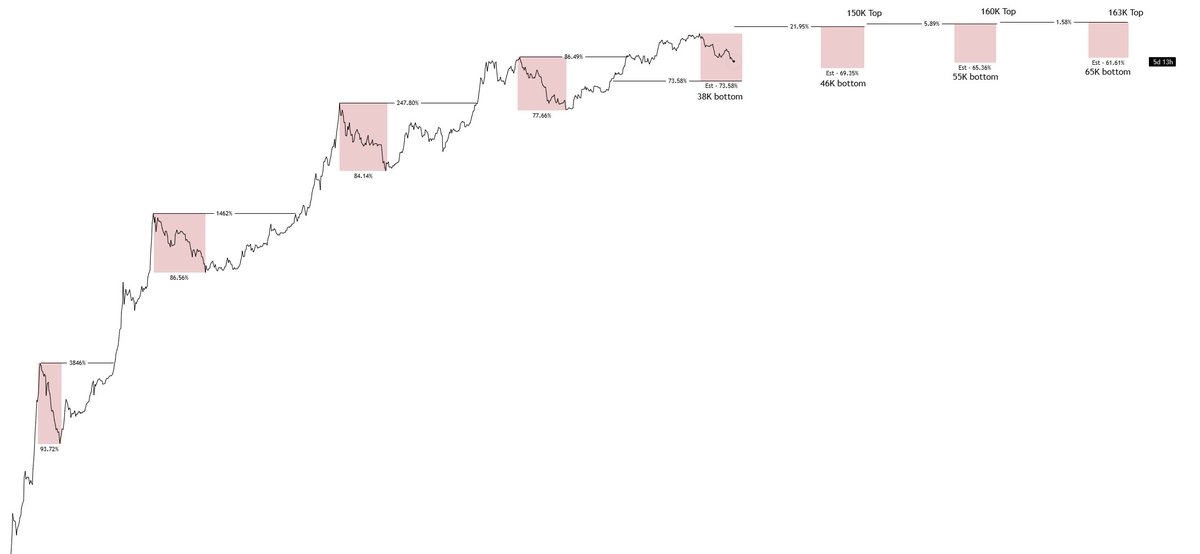
Bitcoin finirà per rompere il modello dei cicli decrescenti. Ho analizzato i numeri sia dei rendimenti decrescenti sopra ogni ATH precedente sia dei ribassi progressivamente più contenuti del mercato ribassista dal primo ciclo di $BTC. Seguire questa traiettoria per sempre semplicemente non ha senso. Se il modello continuasse indefinitamente, Bitcoin finirebbe per diventare un asset che quasi non si muove, nonostante l'aumento della domanda globale, l'espansione monetaria continua + offerta limitata. A un certo punto, il modello deve rompersi. La mia visione è che questa rottura arriverà tramite minimi del mercato ribassista significativamente più alti di quanto la matematica storica suggerirebbe. Quando ciò accadrà, anche l'intero modello dei rendimenti decrescenti inizierà a fallire, portando a un rialzo più forte di quanto la tendenza proietti attualmente. Da un punto di vista puramente matematico, il modello implicherebbe qualcosa del genere... In questo ciclo: minimo a 38K Ciclo successivo: minimo a 46K Poi: minimo a 55K Poi: minimo a 65K Questa traiettoria non ha molto senso. Implicherebbe anche un rialzo progressivamente minore dopo ogni ciclo, lasciando infine BTC con pochissima volatilità. Credo che la realtà sarà diversa. Invece di ripetere per sempre i ribassi più contenuti del mercato ribassista, potremmo passare a correzioni del 60%, poi del 40-50%, con recuperi più rapidi e rendimenti più forti di quanto i modelli decrescenti suggeriscano. Se ciò accadrà, cronometrare i minimi dei cicli diventerà sempre più difficile, perché il mercato finirà per non rispettare più i fattori storici di riduzione che tutti si aspettano. Per questo, credo che sia sempre un buon momento per comprare dopo un ribasso macro significativo, invece di cercare di centrare perfettamente il minimo. Molti si fotteranno e perderanno i minimi facendo così.

Bitcoin will eventually break the diminishing cycles pattern. I ran the numbers on both the diminishing returns above each previous ATH and the progressively shallower bear market retracements since $BTC's first cycle. Following that trajectory forever simply doesn't make sense. If the pattern continued indefinitely, Bitcoin would eventually become an asset that barely moves, despite increasing global demand, ongoing monetary expansion + limited supply. At some point, the model has to break. My view is that the break comes through significantly higher bear market lows than historical mathematics would suggest. Once that happens, the entire diminishing returns model begins to fail as well, leading to stronger upside than the trend currently projects. Purely mathematically, the model would imply something like this... This cycle: 38K bottom Next cycle: 46K bottom Then: 55K bottom Then: 65K bottom That trajectory doesn't make much sense. It would also imply progressively smaller upside after each cycle, eventually leaving BTC with very little volatility. I think reality looks different. Instead of repeating the shallower bear market retracements forever, we could transition into 60% corrections, then 40-50%, with faster recoveries and stronger returns than the diminishing models imply. If that happens, timing cycle bottoms will become increasingly difficult, because the market will eventually stop respecting the historical diminishing factors that everyone expects. Hence why I believe it's always a good time to buy after a significant macro retrace, rather than trying to perfectly time the bottom. Many will get f*cked & miss the lows in doing so.

Contenuto prodotto con assistenza di automazione e curatela editoriale.