
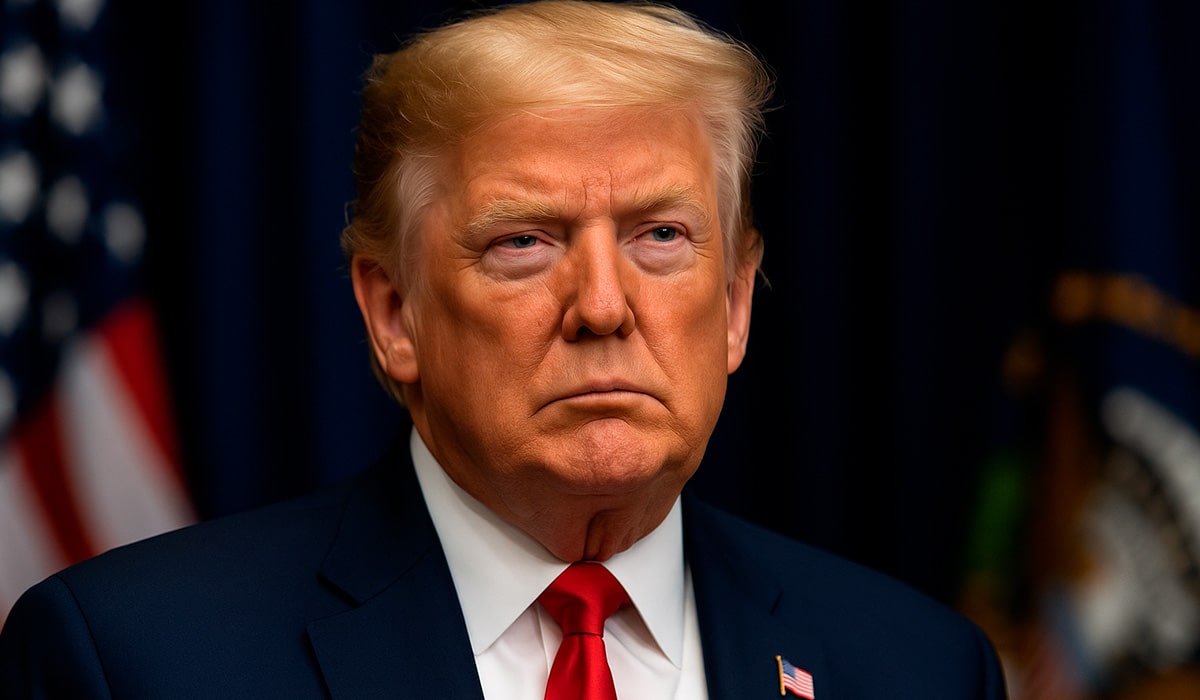
The current president of the United States, Donald Trump, stated this Friday that Washington will continue holding talks with Iran, even after officially declaring the end of the ceasefire established between the two countries last month.
The statement was published on Truth Social and indicates that diplomatic negotiations will remain open, despite the deterioration of the agreement that had temporarily reduced hostilities in the Middle East.
According to Trump, the initiative to resume dialogue came from the Iranian government itself.
“They asked us to continue the ‘talks’,” the president wrote. He then added that the United States accepted the proposal, but stressed that the truce is no longer in effect.
“But the United States has already made it clear to them, in no uncertain terms, that the ceasefire is OVER!” Trump wrote.
So far, the Iranian state press has neither confirmed nor denied that Tehran requested the continuation of the negotiations, leaving the country's official position on the US president's statements undefined.
Meanwhile, information released by US authorities indicates that representatives from both sides are expected to take part in new "technical talks," in an attempt to preserve the diplomatic channel even in the face of the possibility of new military confrontations.
During the NATO summit held this week in Ankara, Trump had already stated that the ceasefire had come to an end after attacks attributed to Iran against commercial ships near the Strait of Hormuz.
At the time, the president stated:
“I don't want to deal with Iran anymore.”
Shortly afterward, upon returning from the meeting, Trump revealed that Iranian authorities had reached out to Washington again to discuss a possible agreement.
“They called a short time ago. They are very interested in making a deal,” he said. “I just don't know if they are worthy of a deal. I don't know if they will honor the deal. That's the problem.”
On the Iranian side, authorities accuse the United States of failing to comply with the preliminary understanding. Among the criticisms are the resumption of sanctions against the oil sector, the continuation of military threats, and actions related to the Strait of Hormuz.
In response to the attacks against three merchant vessels in the region, the United States armed forces carried out new military operations. Subsequently, the Treasury Department revoked the exemption that allowed Iran to export oil.
The markets followed developments closely. Brent crude oil futures fell to US$ 76,30 per barrel, while US WTI was traded at US$ 71,87.
The evolution of the negotiations between the US and Iran continues to be monitored by investors, as new tensions in the Middle East may influence the price of oil, the performance of global stock markets, and also the cryptocurrency market, including Bitcoin.