
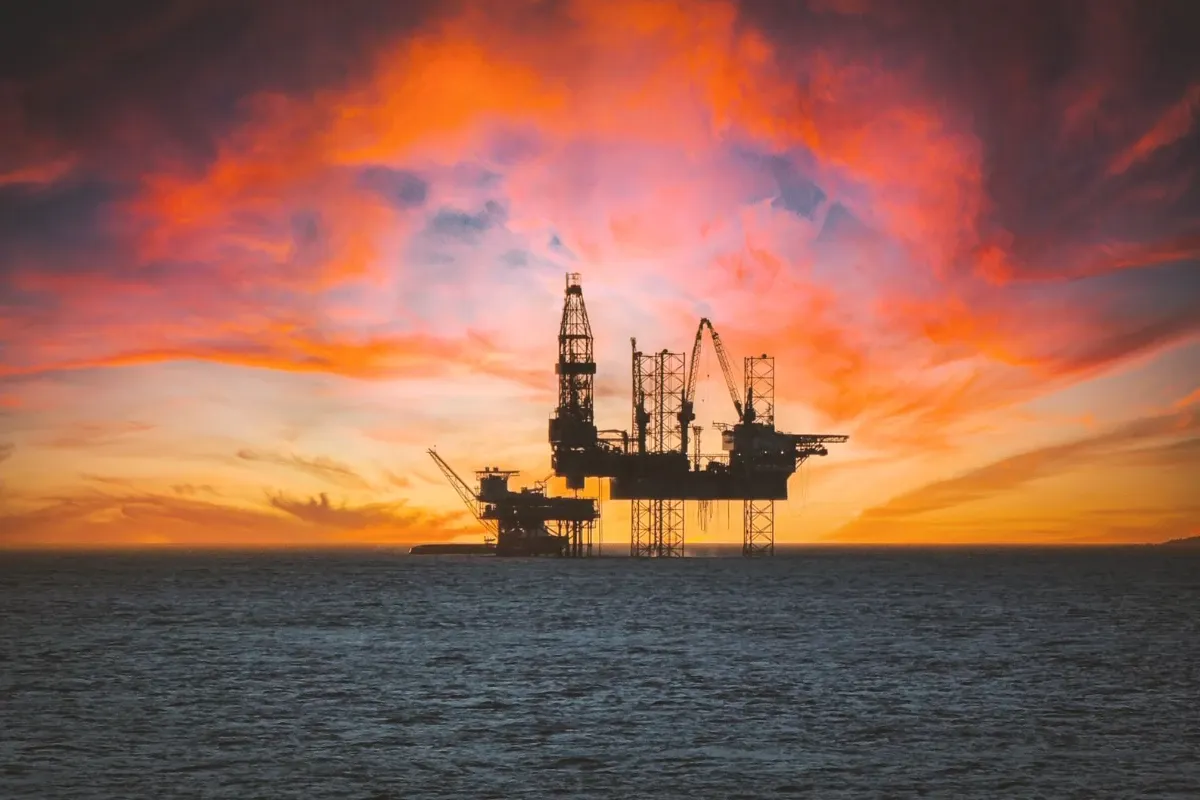
Oil prices rose sharply again this Wednesday, after a new round of U.S. military attacks against targets in Iran. The movement took Brent oil today close to US$ 95 per barrel, while West Texas Intermediate (WTI) also posted strong gains, reinforcing market concerns about possible disruptions to the global energy supply.
Brent futures advanced about 4%, trading around US$ 94.76, while WTI also reached the same level during morning trading. The escalation comes amid the eleventh consecutive day of military operations conducted by U.S. Central Command (Centcom) against Iranian facilities.
During a meeting of ASEAN foreign ministers, U.S. Secretary of State Marco Rubio said that Washington remains willing to seek a diplomatic solution to the conflict, but indicated that he still does not see similar willingness on Tehran's part.
“The U.S. would love to reach a diplomatic agreement, we would love to reach an agreement, if possible, with Iran… in which they say they will no longer sponsor terrorism and that they will not seek to develop nuclear weapons or the things necessary for that,” he said.
Rubio also stated that the Iranian government failed to honor commitments recently made during negotiations between the two countries.
“If you make an agreement and then violate it, that agreement ceases to be valid,” Rubio said. “That does not mean there cannot be a future agreement, but, ultimately, that future agreement will have to be assessed based on compliance with the conditions. And that agreement provided for the opening of free and fair navigation in the Strait of Hormuz.”
The secretary also stressed that protecting the main maritime route for global oil transportation will continue to be a priority for Washington.
“We will continue protecting navigation, and we believe other countries should join us in this effort,” he said. “The president has many options at his disposal, if they continue insisting on not cooperating… I think Iran knows we have many options.”
Earlier, Rubio also said that the United States “will do whatever is necessary to protect our interests and also the interests of our allies.”
The statements came a day after current U.S. President Donald Trump said that Iran was showing interest in resuming negotiations, but that Washington did not intend to move forward unless there were concrete signs of cooperation from Tehran.
“If we left now, Iran would take 20, 25 years to rebuild. And we are not finished yet... we are not leaving now.”
According to Centcom, the most recent attacks targeted military operations centers, maritime facilities, aircraft hangars, drone depots, and logistical structures. The stated objective was to reduce Iran's capacity to threaten commercial navigation in the Strait of Hormuz, a strategic passage through which a significant portion of global oil exports transits.
The rise in oil prices also began to influence investors' expectations regarding U.S. monetary policy. Analysts highlighted that the increase in energy prices raised bets on a more hawkish stance from the Federal Reserve, given the risk of new inflationary pressures.
In addition to tensions in the Middle East, the market is monitoring logistical difficulties in the Black Sea. The interruption of operations at the Russian CPC terminal, responsible for the flow of oil from Kazakhstan, also contributed to increasing concerns about global supply. According to analysts, the longer the export stoppage lasts, the greater the impact may be on regional production and on the balance of the international oil market.